Why Companies Are Hiring for Roles They Thought AI Could Replace
Some employers that cut technical roles expecting AI to absorb the work are now hiring again. The reason is not the code AI writes, but the judgement and accountability it cannot supply.
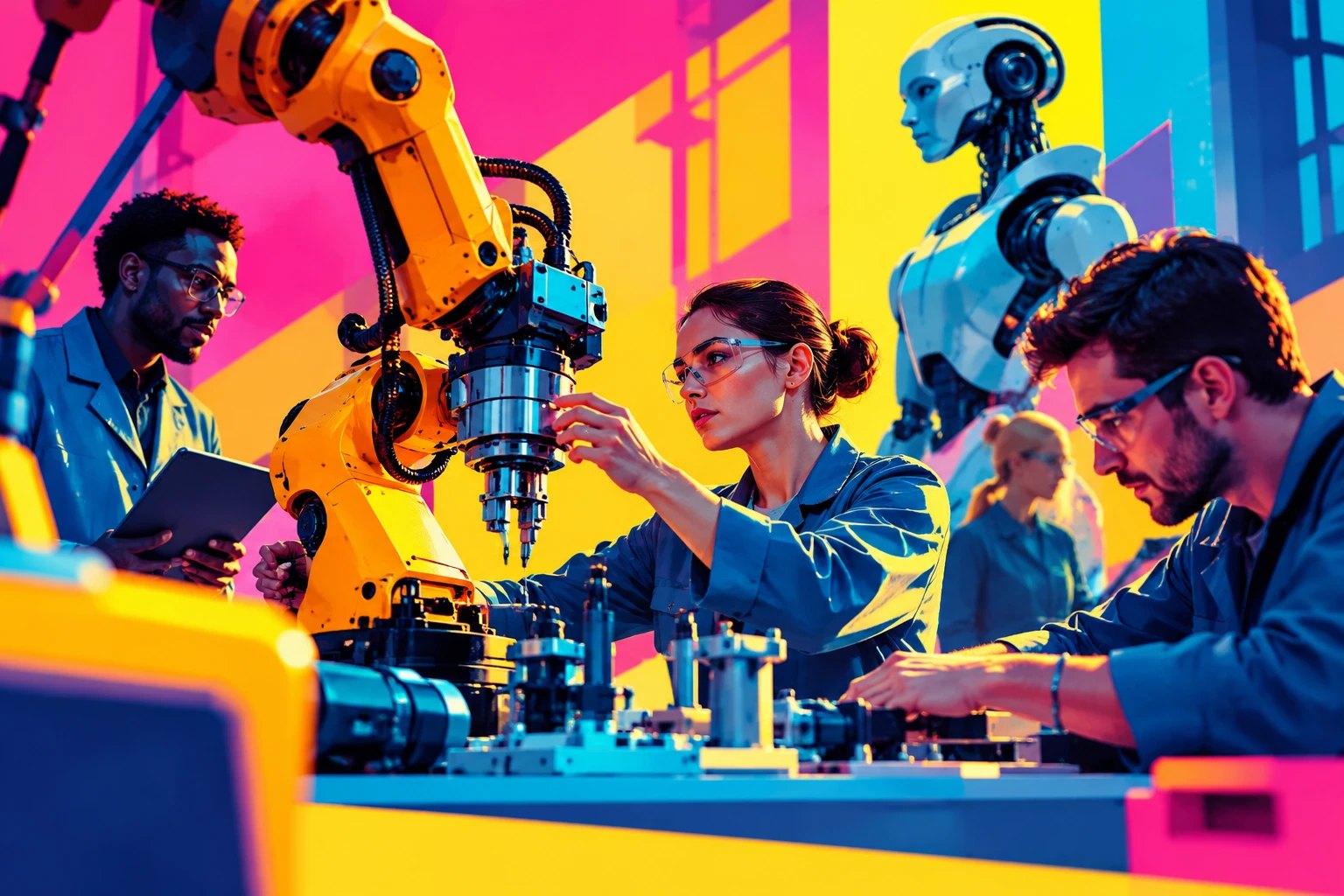
A company can generate code with AI and still lack the engineer qualified to approve it for production. That gap helps explain a change in hiring.
After treating automation as a reason to reduce technical positions, some employers are discovering they still need people who understand their systems, challenge decisions and take responsibility when something fails.
This matters in Web3 and fintech, where a software mistake can affect payments, customer funds or security. Companies must learn to use AI productively while preserving the expertise that makes their products reliable.
When the Hiring Experiment Changed
By late 2024, smaller engineering teams looked attractive to executives experimenting with generative AI. Some paused hiring or eliminated positions, expecting coding agents to absorb the work. Economic uncertainty and earlier overhiring also influenced technology-sector layoffs, so attributing the broader trend to AI alone would be misleading.
Robert Half’s 2026 research found that 32% of US hiring managers who eliminated roles after implementing AI later reinstated the same or similar positions. Among those making these hires, 40% cited missing institutional knowledge, while 38% needed more human oversight than expected.
The survey does not establish a universal reversal. It does show that automating tasks can leave important responsibilities without an owner.
What Hiring Conversations Reveal
Through recruitment work and conversations with Web3 and fintech founders at international industry events, including TOKEN2049 and Consensus, we have encountered a recurring expectation: adopting AI agents should quickly increase productivity while allowing companies to reduce engineering headcount.
In more recent discussions, some executives have shifted their attention toward restoring technical capabilities they previously expected AI to handle. These conversations are qualitative observations rather than a representative picture of the industry, but they reveal a mistake worth examining.
An experienced engineer carries knowledge of why a product was built a certain way, which shortcuts failed previously and which risks the company cannot accept.
Consider a payment platform using AI agents to maintain transaction-handling code. An agent might generate a working update, but someone must understand why certain safeguards exist, review the change and respond when production behaviour differs from testing.
The problem is assuming that faster output automatically creates a stronger business. Removing experienced employees can leave companies spending more on supervision, corrections and infrastructure while losing the people who understand their products and share their direction.
Companies can also access many of the same AI models as their competitors. Sustainable advantages increasingly depend on how teams apply those tools, solve problems and make decisions.
What the Wider Labour Market Shows
An August 2026 Stanford Digital Economy Lab study found no widespread economy-wide displacement associated with AI. However, employment among 22-to-25-year-olds in AI-exposed occupations stood 19% below where it would have been had it kept pace with less-exposed occupations.
The gap mainly reflected slower hiring, while experienced workers showed no comparable difference. Researchers described these findings as early patterns, rather than proof of AI’s causal impact.
This creates a long-term concern: companies reducing junior hiring still need to develop the senior engineers they expect to rely on.
Engineering Still Needs Ownership
AI coding agents can generate functions, tests and documentation. Experienced engineers determine whether those solutions fit the architecture, protect users and remain maintainable.
Anthropic’s October 2026 study found that junior technical positions accounted for a smaller share of its hiring as AI use expanded. Managers increasingly valued autonomy and judgment.
Anthropic is an unusually intensive AI adopter, so its experience may indicate a possible direction rather than a typical workplace.
For a company handling financial transactions or digital assets, someone must understand system dependencies, evaluate security decisions and ensure changes behave as expected. These responsibilities remain especially important when automated tools can introduce changes quickly.
Testing, Security and Infrastructure Need Human Judgment
AI can draft test cases, analyse system logs and suggest vulnerability fixes. However, software that passes automated testing can still contain security weaknesses or fail under unexpected production conditions.
A 2026 Black Duck survey of 831 engineering and DevOps professionals found that 90% reported their teams encountered issues with AI-generated code. Manual review (52%), security testing (51%) and rework (48%) were common bottlenecks.
As vendor-sponsored research, the survey reflects participants’ experiences rather than the defect rate of all AI-generated code.
Automated systems can support security work, but companies still need specialists capable of recognising risks, investigating failures and taking responsibility for critical systems.
Complex Automation Has a Cost
Simple AI tasks can be inexpensive. A coding agent handling a complex project may repeatedly examine files, run tests and retry failed approaches. These actions consume tokens, the units used to measure information processed and generated by AI models.
An April 2026 Microsoft Research study found that agentic coding tasks consumed roughly 1,000 times more tokens than simpler coding chats in its experiments. Repeated attempts at the same task varied by up to 30 times in token consumption, without reliably improving accuracy.
This does not prove that employing engineers is always cheaper than using agents. Model prices, task complexity and workloads vary. Companies must calculate the complete cost of reliable work, including infrastructure, human review and correcting mistakes.
Rethinking Team Structures
PwC’s 2026 AI Jobs Barometer found that headcount grew faster at more AI-exposed companies than at less-exposed companies. This association does not prove AI caused the growth, but it challenges the assumption that successful adoption requires fewer employees.
Companies should retain people who understand critical systems, give them tools that improve their work and create development paths for less experienced engineers.
Junior professionals also need meaningful responsibilities and mentorship. Reducing entry-level hiring today could leave businesses struggling to find experienced specialists tomorrow.
People Still Give Companies Direction
AI will continue changing employment. Some roles will shrink, others will expand, and new responsibilities will emerge.
Over the next several years, experienced engineers are likely to remain important because companies still need architecture, security judgment and accountable decision-making. Technology will change how those responsibilities are carried out, and growing AI capabilities will continue challenging existing assumptions.
Strong products depend on people who understand their purpose, share the company’s goals and can recognise when a decision puts those goals at risk.
Competitors can obtain the same AI models. What distinguishes a business is the knowledge, judgment and commitment of the people who turn those tools into dependable results.
Disclosure: Kirill Veretin is the founder and CEO of Veretin Recruitment, which recruits engineers for Web3, AI and fintech companies.
References
- Robert Half (2026). May 2026 Labor Market Update; Labor Market Outlook Through Year-End 2026. Original research
- Stanford Digital Economy Lab (August 2026). Canaries in the Coal Mine? No Widespread Displacement, but the AI Employment Gap for Young Workers Has Widened to 19%. Original research
- Anthropic (October 2026). How Employment Is Changing at Anthropic. Original research
- Black Duck (2026). The State of AI-Powered Software Development. Original report
- Microsoft Research (April 2026). How Do AI Agents Spend Your Money? Analyzing and Predicting Token Consumption in Agentic Coding Tasks. Original research
- PwC (2026). 2026 Global AI Jobs Barometer. Original research
The Daily Five